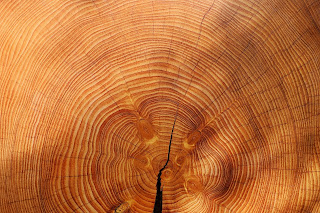
 If we examine the trunk of a tree that has been chopped down, we will see first of all the outer ring of the bark which acts as a sort of waterproof coat for the tree. Inside the outer covering come a number of concentric rings.
Each one of these rings represents a year in the life of the tree. The space between the rings is the wood which the tree produced during one year.
By counting the number of rings we can tell when the tree has born. These rings also indicate the dry periods the tree lived through as well as wet periods. In dry times the rings are very thin. In heavy rainfall years, the rings are thicker.
The slender course of wood can be taken from a tree, from the bark to the center of the trunk: these samples reveal the same information and are taken with a borer that does so significant damage to the tree.
Scientists can learn about the climatic changes that happened in the past by studying the shape and size of the rings.


